


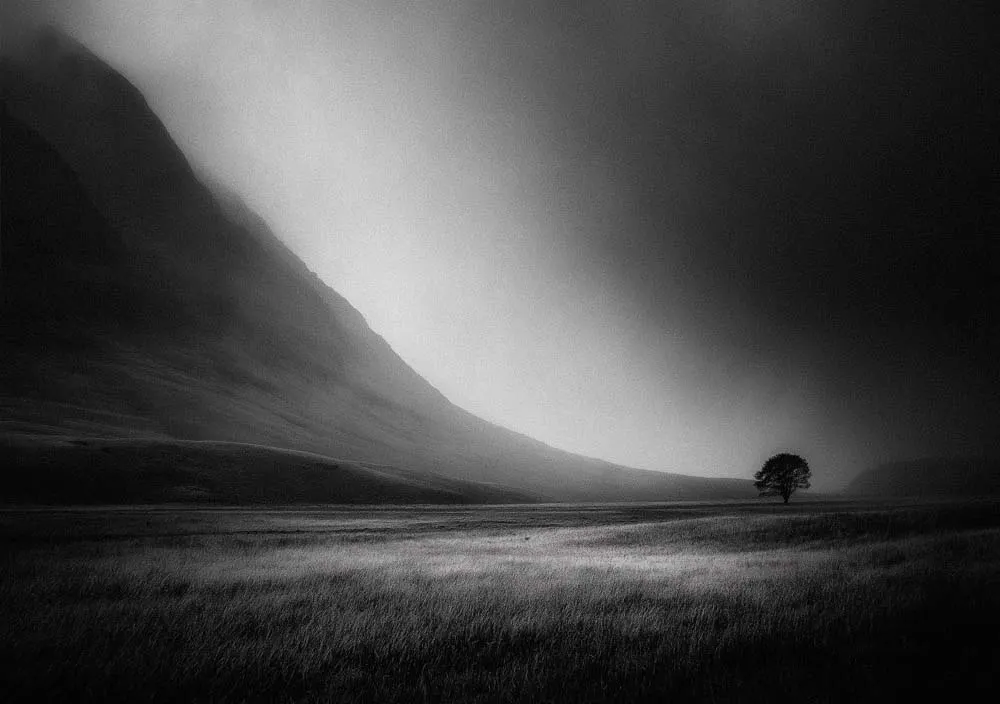
Colour landscapes dazzle. They sell postcards, screensavers, and Instagram likes. But when you strip colour away, the question becomes unavoidable: are you revealing the soul of the land, or hiding behind a stylistic trick to make anything look like “art”?
This is where monochrome landscape photography divides opinion — and why it still matters.
Stripped to the Core – Form, line, and texture replace the distraction of saturated skies.
Atmosphere Over Accuracy – Mist, fog, and storm light feel heavier in B&W than colour ever could.
Timelessness – A monochrome mountain could have been captured yesterday or a century ago.
Control of Mood – You decide if a scene whispers (soft tones) or shouts (harsh contrast).
Escaping Colour Trends – HDR sunsets and hyper-saturation date fast; monochrome doesn’t.
Flat Conversions – Clicking “desaturate” without shaping tones leaves images lifeless.
Cliché Compositions – Any old hill + heavy vignette ≠ art. Composition matters more than ever.
Weather Blindness – Not every day works. Blue skies often look empty in monochrome.
Fog & Mist – Minimalist, mysterious, soft edges that remove distractions.
Storm Light – Heavy skies + fractured light = natural drama.
Snow & Ice – Stark contrasts, textures, and purity that demand black & white treatment.
Low Winter Sun – Long shadows that carve depth and geometry across the land.
Q: Isn’t removing colour dishonest?
A: It depends — are you revealing structure and mood, or disguising a weak image with “artsy” monochrome?
Q: Do clients or viewers prefer colour?
A: Most expect colour, but they remember monochrome. It lingers longer, because it’s more emotional than descriptive.
Q: Is B&W just for bad weather days?
A: Not at all. But certain conditions — fog, storms, snow — will give you far more impact in monochrome than colour.
👉 Your Turn: Share a landscape where black & white wasn’t a fallback — it was essential. Did it reveal something truer about the land, or did it transform it into something else entirely?
