


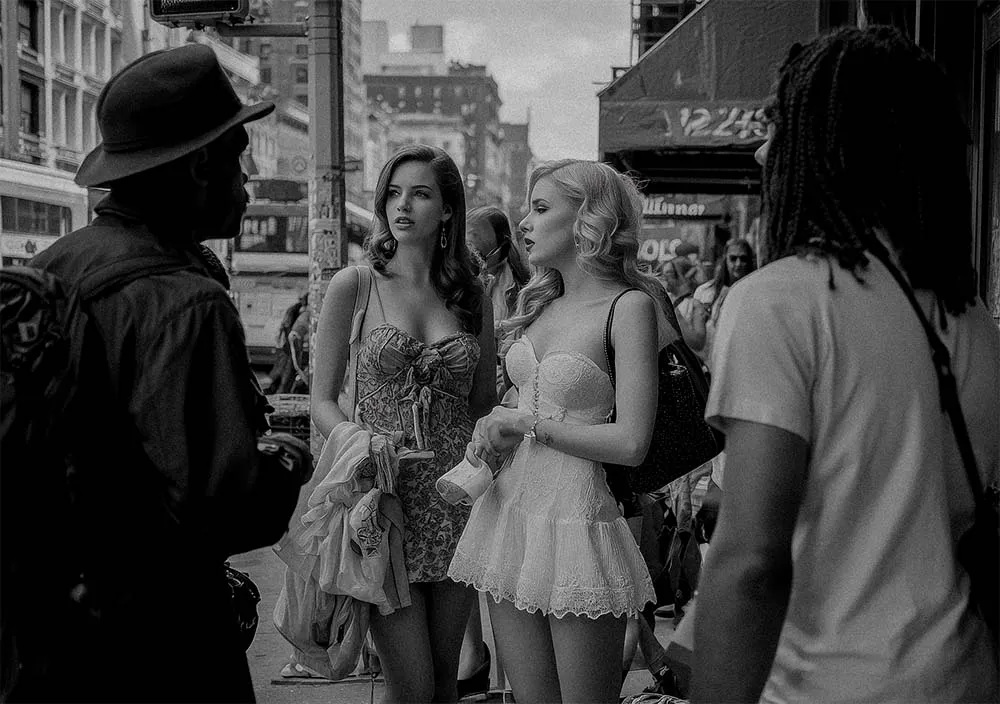
Is Black & White Street Photography Timeless — or Just a Shortcut to ‘Art’?
Street photography has its saints: Cartier-Bresson, Frank, Winogrand. They carved truth out of light and shadow — no tricks, no shortcuts, just timing, patience, and an unforgiving eye. Their images weren’t “styled” in black & white — they belonged there.
But here’s the uncomfortable question: in 2025, does black & white still hold that weight… or has it become the Instagram filter of the insecure, a way to make ordinary snapshots look like “serious photography”?
Every day we see blurred strangers, high-contrast shadows, and grain slapped over weak frames. The myth says “if in doubt, convert to monochrome.” But does that elevate the work — or expose that there was never a strong picture in the first place?
👉 This is the line we walk:
Is monochrome still the purest form of the craft?
Or has it slipped into cliché — a costume weak images wear to look important?
This is where the debate gets uncomfortable. And maybe that’s exactly where it should begin.
Gesture Over Colour – Without distractions, every movement and glance is heightened.
Timeless Atmosphere – A strong monochrome frame could belong to 1954 or 2024.
Mood Over Chaos – Colour noise (adverts, signs, neon) is stripped away, leaving clarity.
Texture & Grit – Pavements, shadows, weather, and grain carry more weight in B&W.
Focus on Light – You begin to “see” light first, not colour.
The Cliché Trap – Any blurred passer-by in monochrome isn’t automatically art.
Lazy Conversion – Hitting desaturate without intent kills the story.
Drama for Drama’s Sake – Crushing contrast without composition feels hollow.
Pre-visualise in Black & White – Train your eye to compose for tones, shapes, and gestures before you shoot.
Build Geometry Into Frames – Shadows, lines, and reflections carry more weight when colour is gone.
Use Contrast Intentionally – Let light guide the viewer’s eye, not overwhelm it.
Chase Human Truth – A look, a gesture, or a fleeting moment will always outlast technique.
Q: Isn’t monochrome just nostalgic?
A: It depends. Done well, it’s timeless. Done poorly, it’s retro wallpaper.
Q: Does B&W make street more artistic?
A: It doesn’t make it artistic. But it removes distractions so your composition and timing have nowhere to hide.
Q: Can colour street be just as strong?
A: Yes — but it’s harder. Colour adds complexity. Monochrome demands clarity.
👉 Your Turn: Share a street frame where B&W wasn’t an afterthought, but a necessity. Did it make the image timeless — or did it simply disguise the chaos of colour?
